- Heart & Soil Newsletter
- Posts
- Growing Mondays: What we learned at the SAHRC Food Inquiry Hearings
Growing Mondays: What we learned at the SAHRC Food Inquiry Hearings
We testified. Here's what happened...

Jo Hunter Adams
March 23, 2026

Hi! I'm Jo, writing from Heart & Soil homestead, a 1-acre homestead in the Far South of Cape Town, South Africa. Every week I share inspiration and education for your growing journey. Thanks so much for reading!
Welcome to Growing Mondays, where I talk about growing- vegetables, fruits, animals and people.
Rather than say what people want, or who they are, we can show them what is possible, inspire them with what could be.
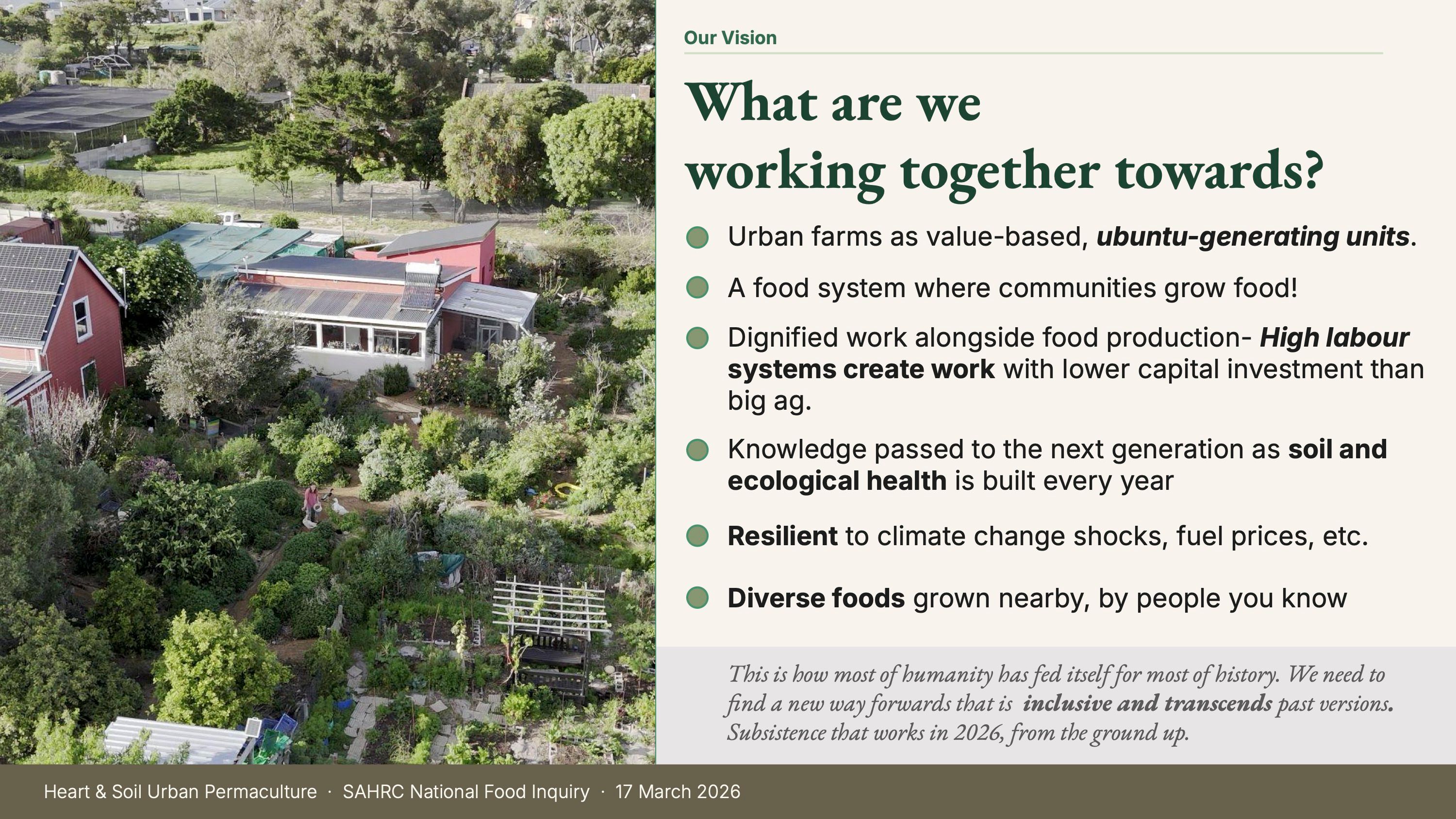
Last Tuesday I left the farm and found myself in a room at the Nelson Mandela Foundation all the way in Jo’burg. I described to a panel of South African Human Rights Commissioners what Black Soldier Fly were…. I also talked about the 80+ tonnes of organic waste that passes through our farm every year, and what happens to it.
It’s hard to talk to government about small-scale farming, especially in the context of 14 million South Africans going to bed hungry in 2024. How can small-scale farming respond to that? I think we can at least try.
The SAHRC's National Inquiry into South Africa's Food Systems is, as far as I know, the most serious official process this country has ever initiated on food. The commissioners were compassionate, rigorous and engaged despite a series of incredibly long days. They asked every presenter hard questions. They kept pressing ministers who were avoiding the hearing, until they finally showed up. And as Professor May highlighted, in some ways the food systems works perfectly, just not for the people who need it most.
Amandla.mobi members were outside the Nelson Mandela Foundation with placards. Inside, researchers and civil society organisations tried to explain why, in a country that exports food, 22% of households can't reliably access it. The major retailers, invited to attend, were notable by their absence.
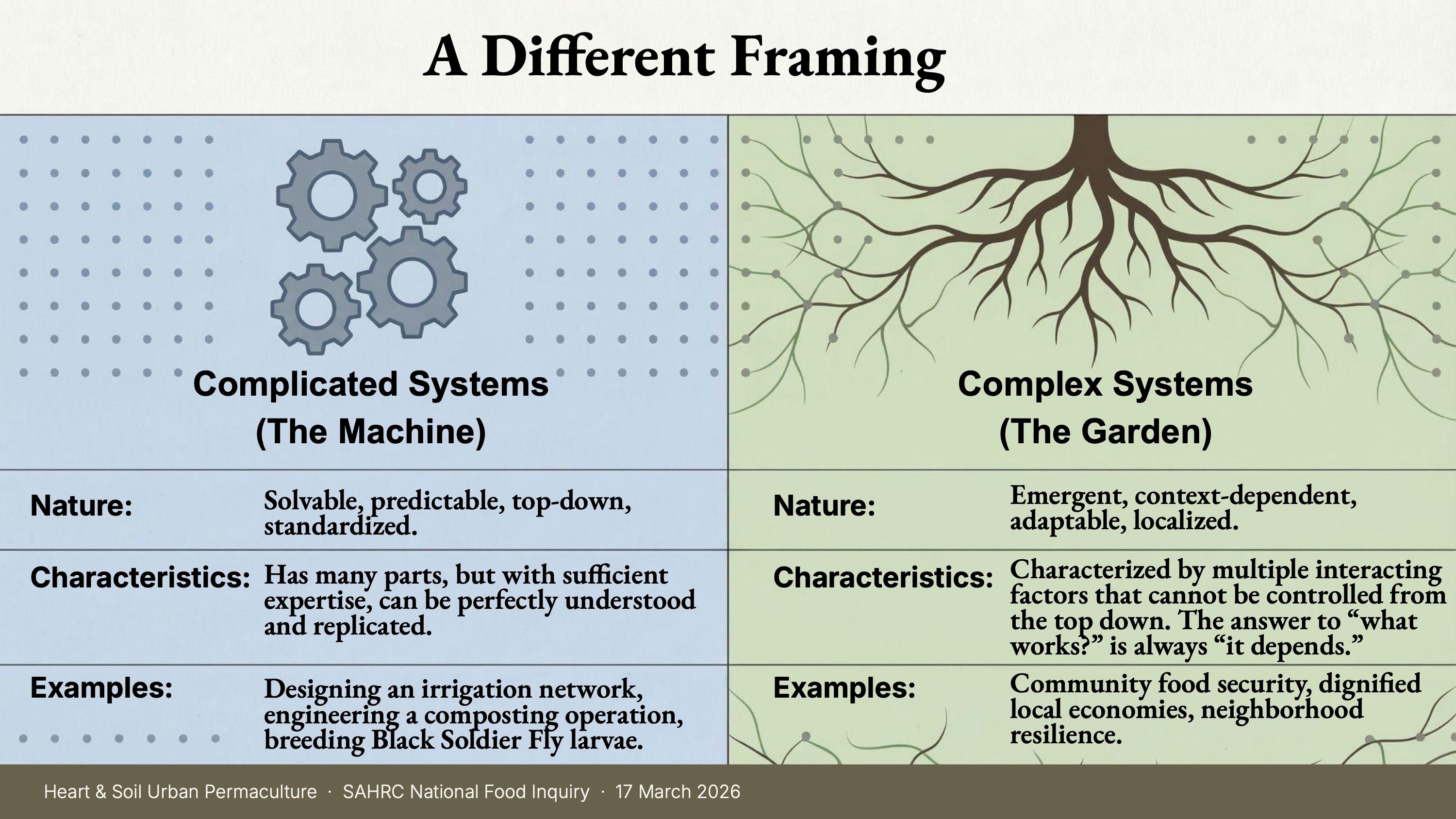
We were there to offer something different: a framing. Food security, we argued, is not a complicated problem to be solved. It's a complex system to be cultivated. The distinction matters enormously for what the state should be doing, and what it should stop doing.
Over the next few newsletters I'll share some responses to questions, what I wish I’d said about how government can actually make food security worse, why the Strait of Hormuz crisis matters for your grocery bill, and what five specific things we think the Commission should recommend.
But for now — thank you for being part of this community, and enjoy some autumn growing reflections below. What happens on this acre of land in the Lochiel smallholdings is, we believe, worth something. And it was good to say so, out loud, in a room of really good people.
🔗 see our full slide presentation submission
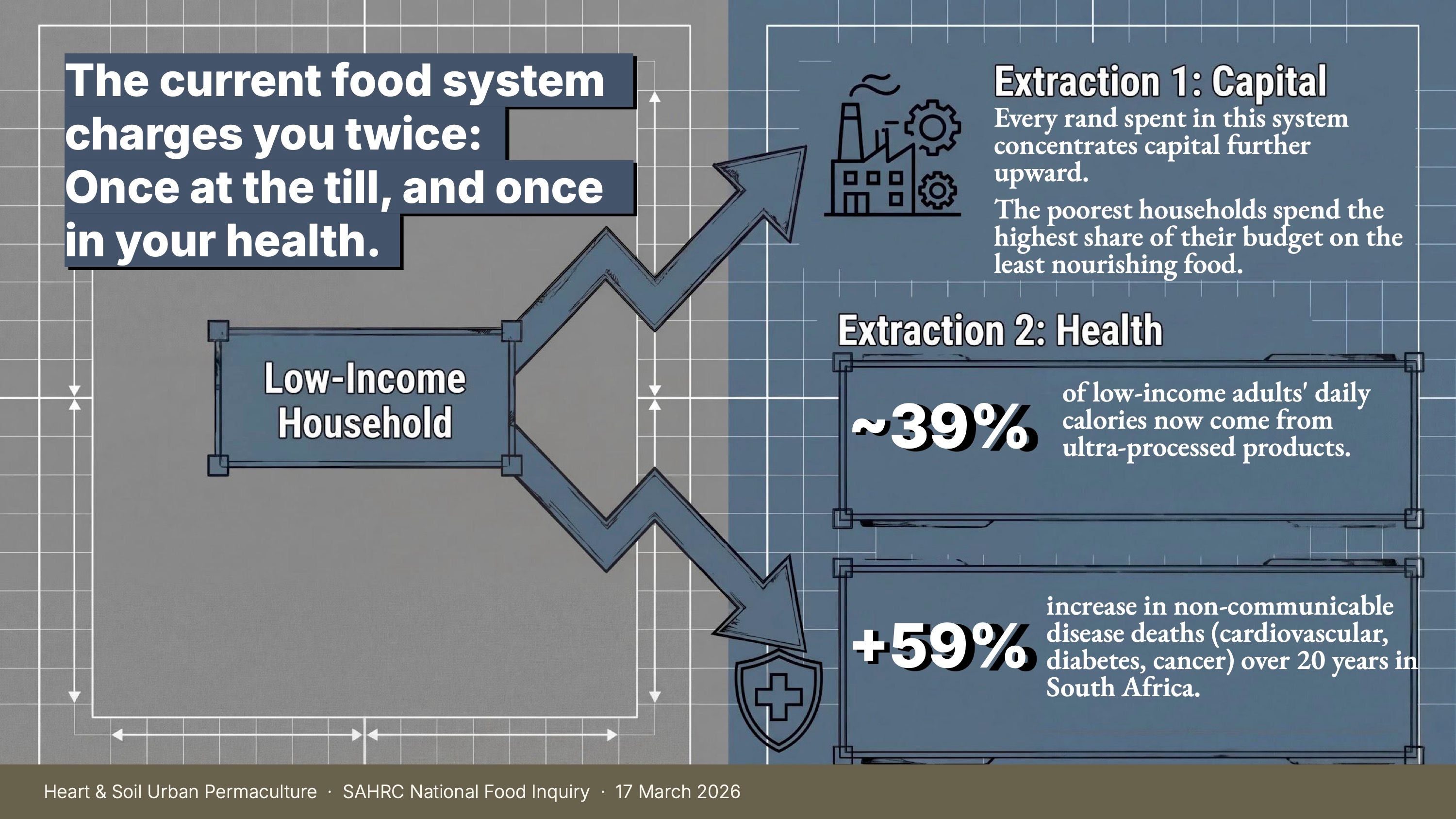
We don’t solve the problem of corporate capture or big food, but I believe that we change something locally in a deep way, and that change compounds and multiplies.
Growing right now
If you’re one to write growing plans in your diary, I would recommend reminding yourself to plant seedlings after the first proper rains (EVEN though gets super hot afterwards). Those first rains signal a change in weather, and the pest load quickly declines, which means a some rapid beautiful growth.
Our Napa cabbages planted about a month ago are looking really good, and we’ve started harvesting spinach and leaf lettuce planted a month ago.
The theme of the next few weeks is just to keep on planting. Think about the cost of vegetables. A packet of seeds are not expensive as a learning tool. Beetroot, radish, lettuce, carrots. Just keep on starting seeds. Don’t worry! We all fail, try again quickly, and keep on growing. This is the prime time to just keep planting!!!!!
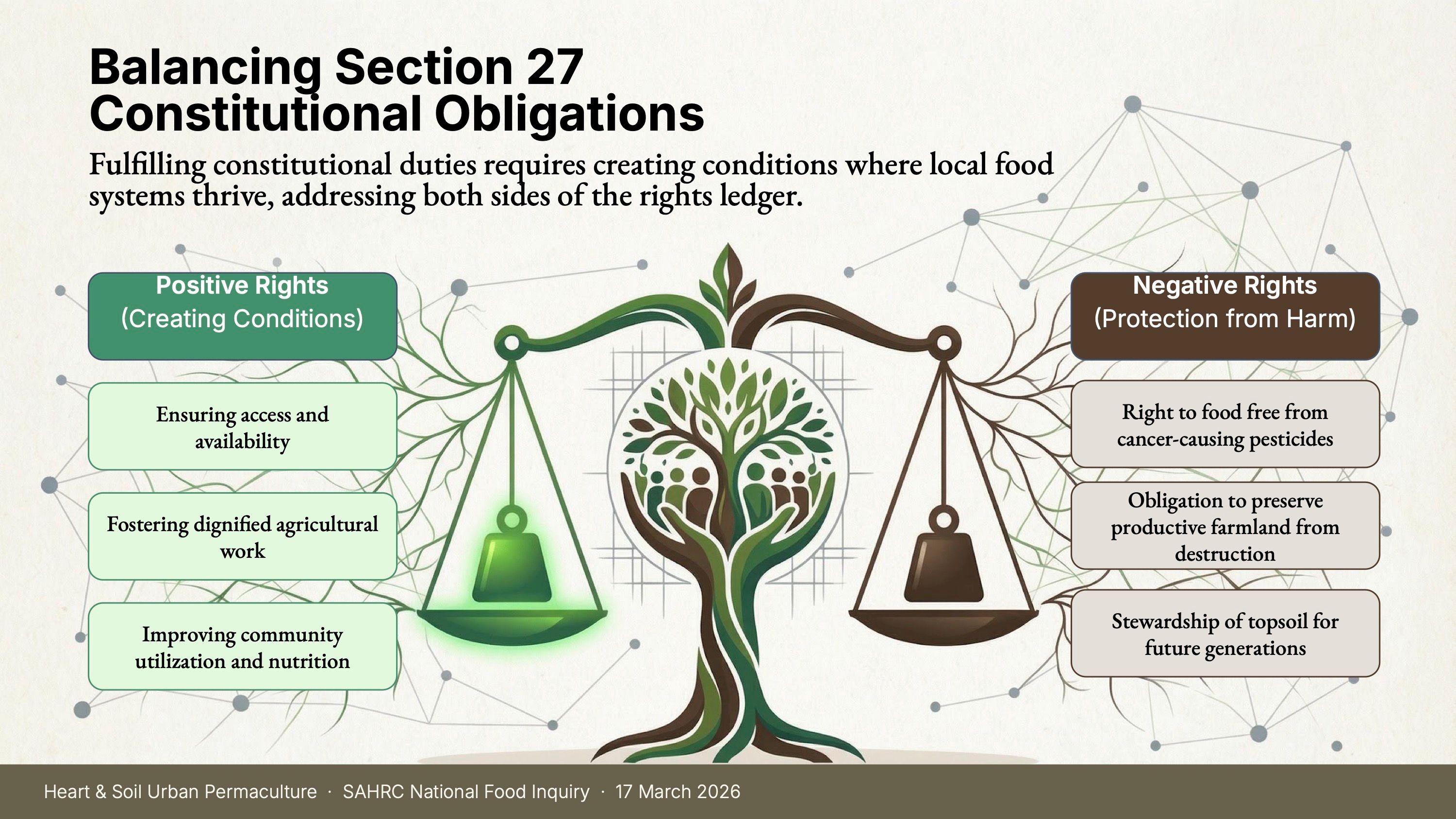
In health law we were taught that the government not only has obligations to make things better, they also have obligations not to make things worse. It may be argued that while positive rights may require resources that the state doesn’t have, negative rights should be the focus point, because they can be realised without vast amounts of money.
Coming up:
18-19 April Our son Eli Emerson Adams (13) will be having the first exhibition of this year’s paintings, right here at the farm. Save the date!
If you are enjoying our newsletter, please consider forwarding on to someone in your community! If you received this from a friend, you can sign up here
Reply