- Heart & Soil Newsletter
- Posts
- Growing Mondays: Is Permaculture just for Rich People?
Growing Mondays: Is Permaculture just for Rich People?
Care of planet, care for people, return of the surplus

Jo Hunter Adams
April 06, 2026

Hi! I'm Jo, writing from Heart & Soil homestead, a 1-acre homestead in the Far South of Cape Town, South Africa. Every week I share inspiration and education for your growing journey. Thanks so much for reading!
Welcome to Growing Mondays, where I talk about growing- vegetables, fruits, animals and people.
Care of planet, care of people, return of the surplus (fair share)
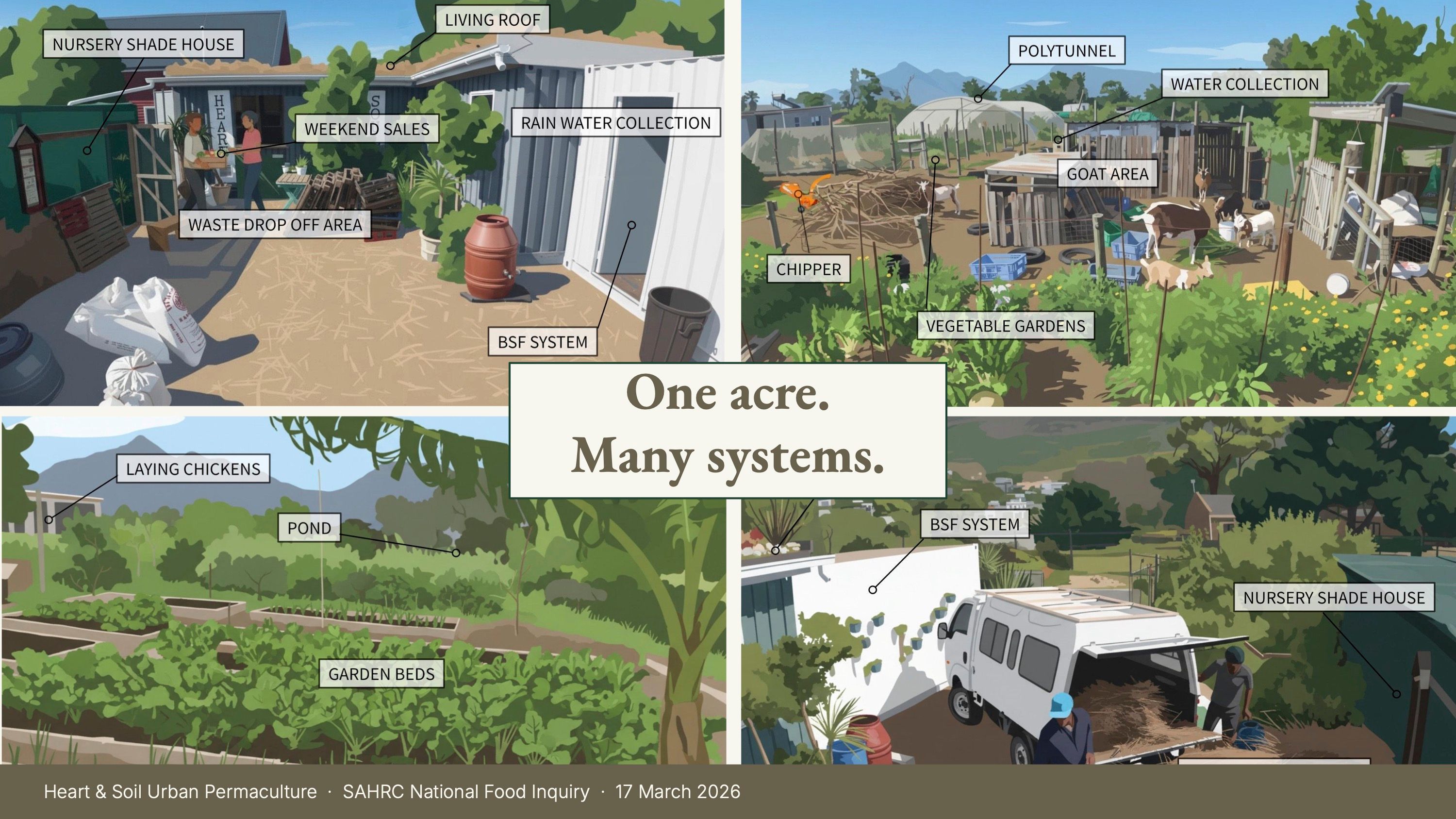
One of the commissioners at the Food Inquiry said their impression was that permaculture was mainly for rich people.
They have an important point.
Permaculture Design Certificates typically cost several thousand rand and take two weeks away from work (Which is part of the reason I don’t have one). Much of the movement's literature assumes land ownership, time wealth, and the ability to absorb years of low productivity while a system establishes itself. The aesthetic — food forests, cob buildings, mandala gardens — can signal lifestyle consumption rather than practical food production. And too often, the movement centres the designer: the expert who arrives with knowledge to apply, which can reproduce the exact top-down dynamic it claims to reject, just with composting toilets instead of tractors.
These are serious issues.
I want to separate two things that often get conflated: the permaculture movement as it currently exists, and the agroecological principles that movement describes.
Those principles — observe before acting, waste nothing, stack functions, use edges, let the system do the work — are not new, and they do not belong exclusively to permaculture. They describe how subsistence farmers, Indigenous land managers, and smallholders across Africa and the Global South have farmed for centuries.
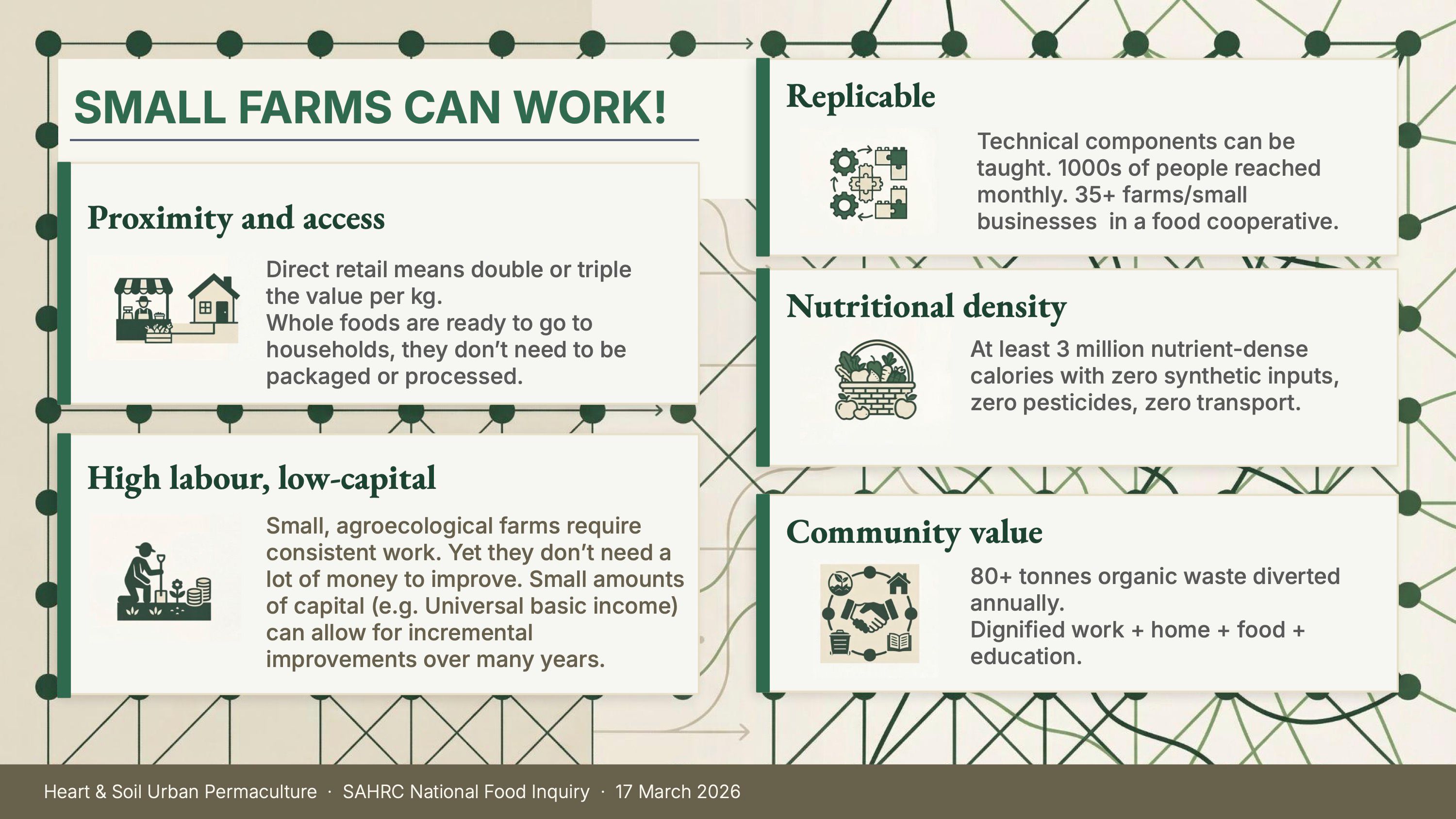
From this angle, I love “care of people, care of planet, return of the surplus,” and the 10 permaculture principles. They are a way of emulating and respecting non-extractive systems, where peasants and subsistence farmers have so much to teach me. Rather than teach expensive courses, I believe in breaking things down into much simpler units through repeated contact, so that people can figure out their own priorities and application of these principles.
We keep trying to be an example of meaningful production, and meaningful remediation of waste, in the city. Skills can be shared and replicated because they generally require lower capital than many larger scale agricultural systems.
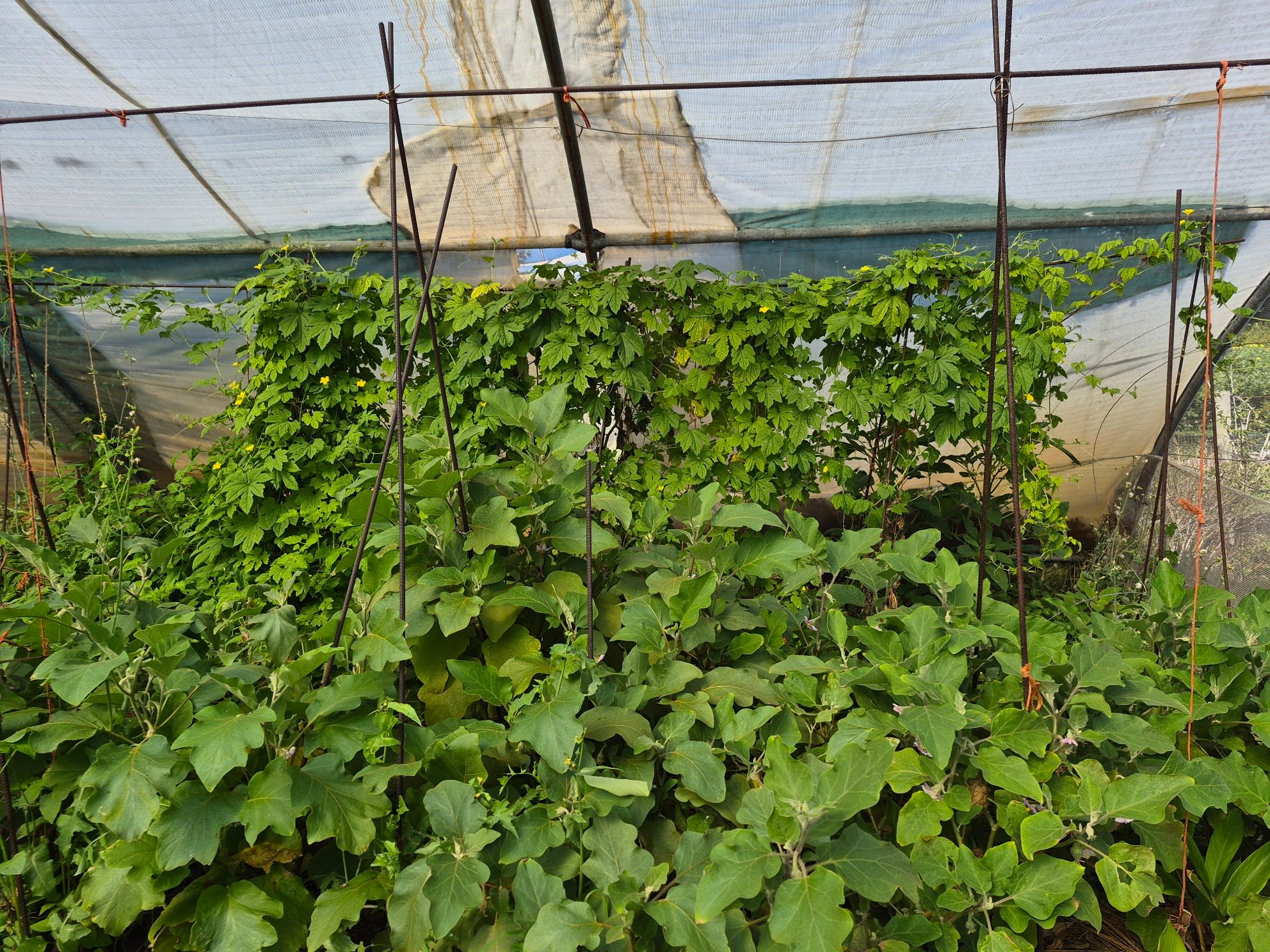
We tend to get a second, sometimes larger, crop of brinjals this time of year. And our bitter melon is growing like crazy.
But I also want to reframe the question a little, to: “How does permaculture relate to economic inequality?” or, perhaps more provocatively, “Could permaculture help the rich become less greedy?”
We’ve all heard that if we have enough money to cover our basics, having more will not actually make us happier. And yet it’s incredibly hard to step off the hedonic treadmill and focus on living according to our values, because norms and school and neighbourhoods and work take over. Permaculture provides an offramp- a framework for thinking and living in terms of values, gradually subtracting things, and maybe making radical simplifications.
The final ethic “return of the surplus” is a reminder of abundance, and that it’s possible to share that abundance. Permaculture principles offer a practical framework for returning to our basic humanity, and a values framework to live modestly and have a sense of enough.
Imagine if the super wealthy had a sense of enough, how much more could be shared? That’s worth working towards. It’s so worthwhile to imagine food and living systems that are so irresistible that they become a way to satiate both our needs and feel safe enough to let go of our greed.
No system will ever be perfect, but building modest, human-scale systems is a very meaningful way to explore our amazing world.
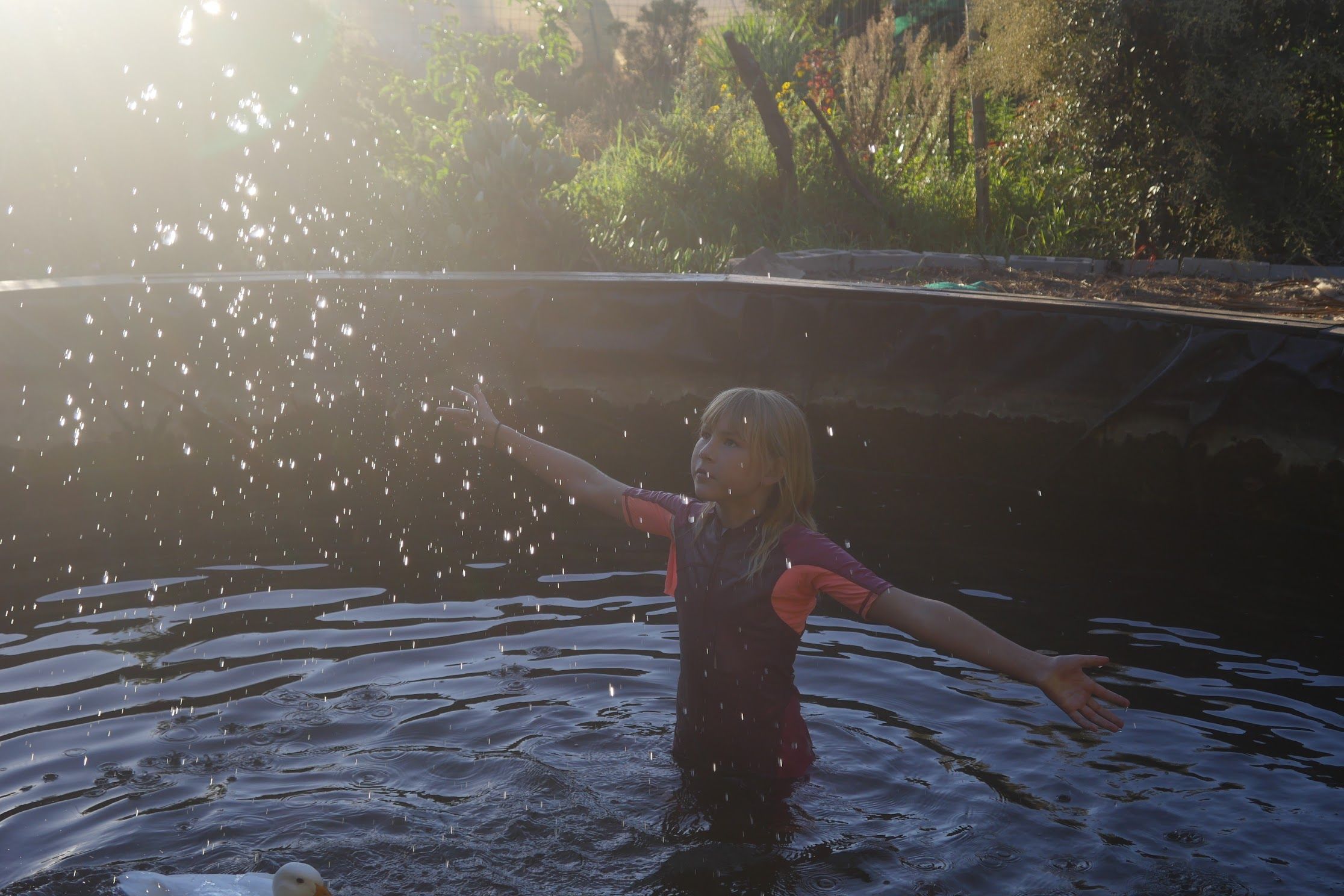
Water levels are a still a bit low as we wait for proper rain, but Miracle duck still gets her daily swims with Hana…
Coming up:
18-19 April Our son Eli Emerson Adams (13) will be having the first exhibition of this year’s paintings, right here at the farm. Save the date!
If you are enjoying our newsletter, please consider forwarding on to someone in your community! If you received this from a friend, you can sign up here
Reply